

Bouygues Construction is a global leader in construction in the building and civil works sector. Spanning the entire value chain, it draws on a wealth of skills and expertise in design, construction, renovation and conversion, with a particular focus on sustainability.
2024 key figures
- €10.3bn Sales
- €18.2bn Backlog
Operational priorities
- Full compliance with the core fundamentals: health and safety, business ethics and human rights.
- Reduce CO2 emissions and develop a responsible supply chain.
- Increase the geographical footprint and number of large-scale projects outside France.
- Commit to low-carbon infrastructure projects and solutions.
- Transform the businesses through mass production and digitisation of processes.
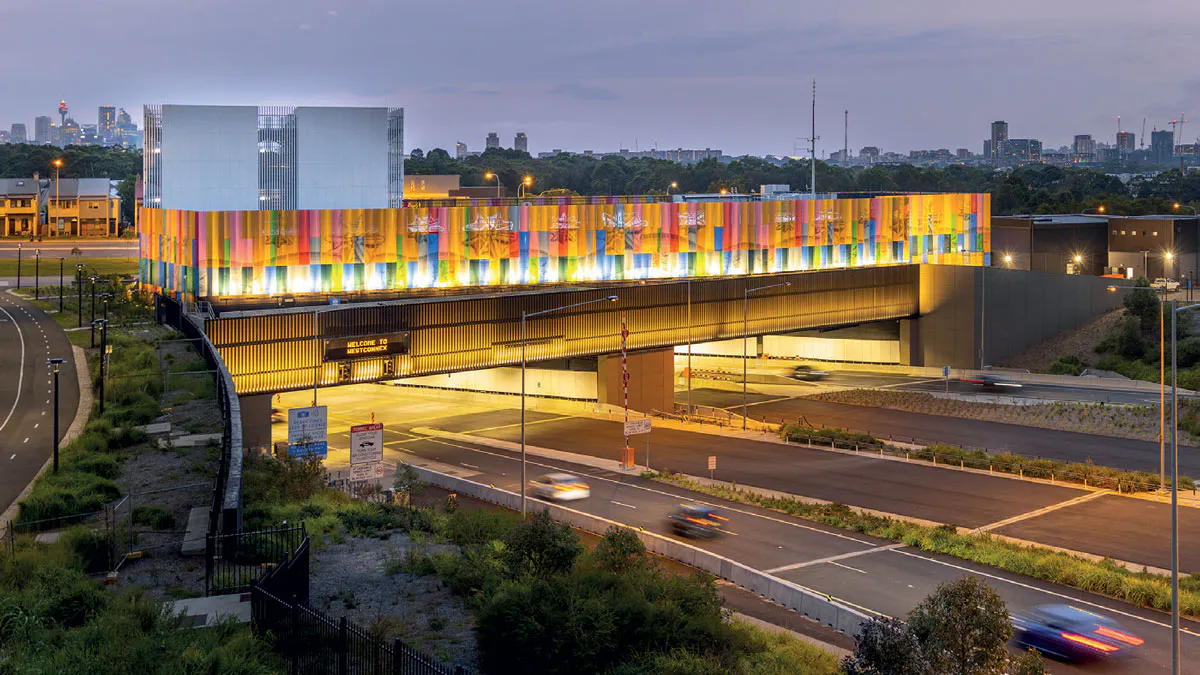

AUSTRALIA – The WestConnex motorway in Sydney built by Bouygues Travaux Publics.
In order to keep pace with the transformation needed to surmount the challenges of the climate emergency, Bouygues Construction works to add new expertise, methods, products and services to its portfolio. In support of this endeavour, it pursues an ambitious climate strategy, backed by a responsible supply chain and a firm set of societal pledges. For Bouygues Construction, employee health and safety, respect for human rights and business ethics are core fundamentals that guide every aspect of its operations. Performance against these fundamentals is managed through TopSite, a certification programme for its worksites that measures compliance with internal CSR standards. Bouygues Construction has also developed specific strategies for its main product lines – nuclear power, healthcare, data centres, refurbished housing, industry and offshore wind – with a view to bolstering its people’s expertise, adjusting its products and services to market trends, and helping its customers decarbonise their assets.
“Building for life”: Bouygues Construction’s new corporate slogan
Bouygues Construction’s 35,600 employees around the world are driven by a noble and powerful sense of responsibility: to build for life. They fulfil this responsibility by building structures that improve the everyday lives of millions of people, meeting essential needs for housing, transport, energy, healthcare, justice, education, industry and more – and by addressing the immense challenges of the green transition.
Continue putting people first
Bouygues Construction places its people and their collective power at the heart of every project, while transforming its corporate and managerial culture and preparing its employees for the challenges that lie ahead. Trust, simplicity, teamwork and pioneering spirit are the four core values that underpin this endeavour.
Strengthen its foothold in key markets
With over 60% of sales generated outside France, Bouygues Construction is experiencing sustained growth in geographies in which it has a longstanding presence, particularly the United Kingdom, Switzerland, Australia, Hong Kong and the United States. At the same time, it is stepping up the expansion of its major projects business in order to meet rising global demand for infrastructure. Bouygues Construction is also continuing to grow its business in France, which accounts for 38% of sales.
An ambitious climate strategy
Bouygues Construction has set ambitious greenhouse gas emissions-reduction targets. By 2030, it is aiming to achieve a 40% reduction in emissions (in absolute terms) for scopes 1 and 2, a 30% reduction in emissions (in intensity terms) for its scope 3 buildings activities, and a 20% reduction in emissions (in absolute terms) for its scope 3 civil works activities. These targets, which were endorsed by the Science Based Targets initiative (SBTi) at the end of 2023, are embedded in the company’s strategic plan. Performance against the targets is tracked using carbon indicators, and related measures such as the use of low-carbon concrete, recycled steel and biofuels are subject to regular reviews. Every project undergoes a lifecycle assessment (LCA) in order to measure its carbon footprint. GHG emissions totalled 4.6 Mt of CO2 equivalent, equating to a reduction of 0.4 Mt of CO2 equivalent.