
Strategy
Macrotrends
Through its six business segments, Bouygues meets its customers’ essential needs for housing, transportation, low-carbon energy, communication, news and entertainment, and helps them reduce their carbon footprint. The business segments’ current countries of operation and priority geographies for expansion underscore the Group’s special focus on ethical values. In these countries, the macrotrends affecting the markets on which the Group is positioned offer medium- and long-term growth opportunities.
Four macrotrends shaping the Group’s business activities
POPULATION GROWTH AND URBANISATION
Construction and renovation of infrastructure and housing, low-carbon mobility, smart and sustainable cities

The Adidas Arena in Paris, built by Bouygues Construction

Conversion of the Hôtel des Postes building into a retirement home in Châteauroux, France (Bouygues Immobilier’s Converso solution)
THE DIGITAL AND INDUSTRIAL TRANSITION
Big data, disruptive technology, artificial intelligence, industry 4.0, growing cyber risk
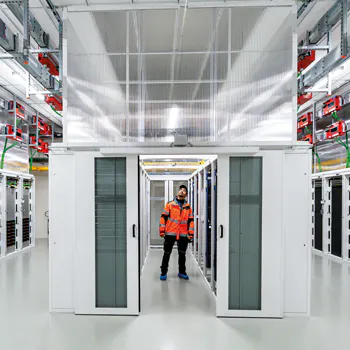
The CERN data centre in Switzerland, built by Equans
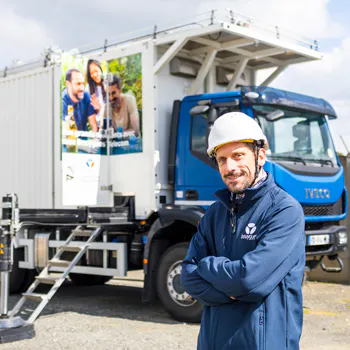
Bouygues Telecom’s 5G BTruck
THE TRANSITION TO A LOW-CARBON, BIODIVERSITY-RICH FUTURE
Resource scarcity, energy transition, heightened pressure on businesses and public authorities
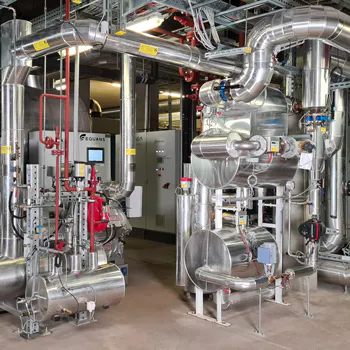
Environmentally friendly cooling system and a high-temperature heat pump at the Ennstal dairy farm in Austria, installed by Equans
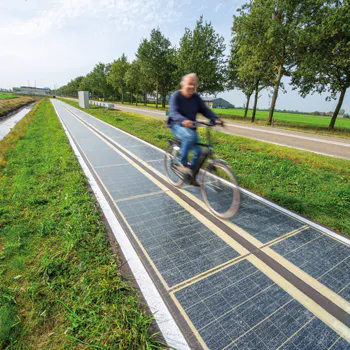
Wattway photovoltaic cycle path in the Netherlands, installed by Colas
CHANGING CUSTOMER BEHAVIOUR
Growing calls for tailor-made and/or integrated products and services, shifting patterns of consumer spending and behaviour, increasing demand for connectivity

Launch of Bouygues Telecom’s new “B.iG” brand

Launch of the TF1+ free streaming platform
Since the six business segments operate primarily in mature countries, the Group is well-placed to ensure compliance with its ethical standards. In 2024, the Group generated 90% of its sales in countries ranked between first and thirtieth place on Transparency International’s Corruption Perceptions Index. The Group maintains constant oversight over all its other operations.
https www.transparency.org/en/ cpi/2024
As well as adhering to the Group’s high ethical standards, its business segments use their expertise, products and services to address the challenges posed by the following four macrotrends.